


-
 4.9/5 sur Google
 -
 Personnalised Service
 -
 Team Based on site
 -
 Experts in motorhomes since 2012
The 2027 Rugby World Cup Experience
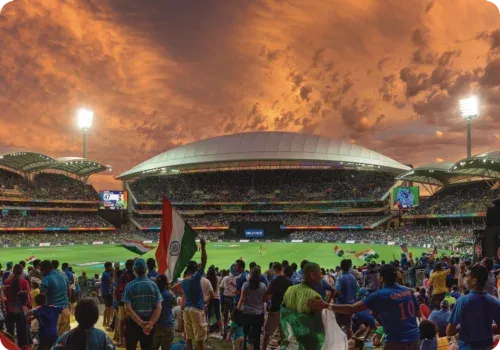
In 2027, Australia will host the Men's Rugby World Cup, bringing the globe's premier rugby tournament to the Southern Hemisphere. Scheduled to take place from September to October, the tournament will feature 24 nations competing across multiple iconic Australian cities, including Sydney, Brisbane, Melbourne, Perth, and Adelaide. For rugby fans, this is more than just a sporting event; it is an invitation to explore a vast, diverse continent. Because the matches are spread across the country, fans will face the unique challenge of traversing massive distances between games.
This is where the idea of a motorhome road trip becomes the ultimate travel hack. Instead of booking dozens of expensive domestic flights and navigating the soaring costs of hotel rooms during major sporting events, renting a campervan or motorhome allows you to combine your transport and accommodation into one rolling home. You gain the unparalleled flexibility to follow your favorite team's itinerary at your own pace, turning the days between matches into an unforgettable adventure.
Choosing Your Home on Wheels
When planning your World Cup road trip, the first major decision is selecting the right vehicle. It is crucial to understand the difference between a campervan and a motorhome, as this will heavily impact your daily comfort and budget.
Vans or campervans are typically compact, rarely exceeding 5.5 meters in length, making them easier to maneuver and park. They are ideal for travelers on a budget. Basic vans might only feature a bed, a cooler, and a small cooking stove accessible from the rear trunk .
High-top vans offer a bit more comfort by providing extra headroom so you can stand up inside, and they move the kitchenette indoors. However, vans are essentially a step up from traditional camping; they can feel cramped if you are traveling with a group of four, and their internal spaces are highly restricted.
Motorhomes, on the other hand, are true houses on wheels. Ranging up to 8 meters long, they are significantly more spacious and can easily accommodate families or groups of friends. Motorhomes feature over 2 meters of interior height, fully equipped kitchens with ovens and microwaves, and, most importantly, internal bathrooms with a real shower and a fixed toilet. While they are more expensive to rent and consume more fuel, the level of comfort they provide for a multi-week World Cup tour is unmatched.
Navigating Insurance Options (The Most Critical Step)
One of the most confusing aspects of booking a motorhome is understanding the insurance policies, which are technically "excess reduction" policies.
Standard insurance is almost always included in your base rental price, but it comes with a massive liability: in the event of any damage to the vehicle, whether it is your fault or not, you are responsible for an excess that typically ranges from $2,500 to $4,000 for vans, and $5,000 to $7,500 for motorhomes. If someone dents your parked vehicle while you are watching a rugby match, the rental company will deduct this massive amount from your credit card.
All inclusive insurance: To avoid driving with anxiety, you can opt for "All-Inclusive" insurance. By paying a daily premium (usually between $30 and $80 depending on the vehicle), your liability is reduced to zero. If an accident occurs, the rental company covers the repairs entirely. However, you must be aware of the strict exclusions. Even with All-Inclusive insurance, you will not be covered if you break the law (such as driving under the influence or running a red light). Furthermore, almost no rental company covers damage to the underbody or the roof (overhead damage). If you accidentally drive your high-top motorhome into a low-clearance fast-food drive-through or a subterranean parking garage, you will be paying for the roof repairs out of pocket. Driving on restricted or some unsealed roads (gravel roads) will also void your insurance entirely.
Third-party companies (like Rental Cover): If the daily cost of All-Inclusive insurance feels too steep, third-party companies (like Rental Cover) offer alternatives. You can buy a policy from them for about half the daily price. You will still need to leave the full $7,500 excess with the rental depot, and if damage occurs, the rental company will take your money, but you can then claim it back from your third-party provider.
Finally, do not rely on your premium credit card insurance without checking the fine print; most credit card policies explicitly exclude rental vehicles that exceed 8 cubic meters, meaning motorhomes are not covered.
Itinerary Planning and Daily Life on the Road
When mapping out your route between the World Cup stadiums, do not underestimate driving times. While the speed limit on major highways might be 100 km/h, the reality of navigating secondary roads in a heavy, bulky vehicle means you should calculate your travel times based on an average speed of 70 km/h. Rushing in a motorhome leads to fatigue and accidents, so pad your itinerary with plenty of buffer days.
As you plan where to sleep, you have a few options. Private holiday parks are fantastic for comfort, costing between $50 and $100 per night for a powered site. They offer hot showers, spacious kitchens, laundries, and secure parking. During high-demand periods like the Rugby World Cup, you absolutely must book these well in advance, especially in major cities or near the stadiums.
Alternatively, you can stay in National Park campsites. These are much cheaper (around $20 per person) and are located in breathtaking natural settings, though they offer very basic infrastructure, often just a cold shower and a basic toilet.
If you dream of "freedom camping" (camping for free in the wild), your vehicle must be properly equipped. Using New Zealand’s strict self-containment laws as the gold standard, true freedom camping requires a vehicle with a fixed toilet that can hold waste for three days, a fresh water tank, a grey water tank connected by a siphon to the sink, an evacuation hose, and a rubbish bin with a lid.
If you plan to do a lot of freedom camping between matches, ensuring your rented motorhome has full self-containment capabilities is essential
Even with a fully self-contained vehicle, expect your resources to last about three to four days before you need to visit a holiday park to dump your waste, refill your fresh water, and plug into the mains to recharge your house battery.
To stretch your battery life further, turn off the main power switch when not in use, and keep frozen water bottles in your fridge so the appliance doesn't have to work as hard to maintain its temperature.
Check out our article on Camping in Australia for more information

Lorem ipsum dolor sit amet consectetur
sed do eiusmod tempor incididunt ut labore et dolore magna aliqua. Ut enim ad minim veniam, quis nostrud exercitation
Lorem ipsum dolor sit amet consectetur
sed do eiusmod tempor incididunt ut labore et dolore magna aliqua. Ut enim ad minim veniam, quis nostrud exercitation
Lorem ipsum dolor sit amet consectetur
sed do eiusmod tempor incididunt ut labore et dolore magna aliqua. Ut enim ad minim veniam, quis nostrud exercitation
Arrival, Vehicle Pick-up, and First Steps
Your adventure begins the moment your flight lands. Customs in Oceania are incredibly strict regarding biosecurity. You must meticulously declare any food, outdoor equipment, or hiking boots. A forgotten apple in your backpack or mud on your shoes can result in a hefty instant fine, which is a terrible way to start a holiday. Once you clear customs, use your voucher to find the rental company's shuttle bus or grab a local taxi to head to the depot.
Do not rush the pick-up process. When the attendant hands over the keys, ask them to demonstrate exactly how the vehicle works. Check that the water pump operates, ensure the gas bottles are completely full, and locate all the necessary hoses for fresh and grey water. Count your plates, cups, and cutlery to ensure you have enough for your party, and thoroughly inspect the vehicle for any pre-existing damaging. Taking an extra 20 minutes here prevents you from discovering a broken water pump when you are hundreds of kilometers away in the outback or that your are missing the hose bit to fill the water (experience talking here).
For your first afternoon, keep things incredibly simple. Find a local supermarket (often located within 5 minutes of the airport depots) to stock up on essentials. Make sure you have packed your belongings in soft duffel bags rather than hard-shell suitcases, as soft bags can be easily folded and stored in the motorhome's limited cabinets.
Finally, book your first night in a holiday park less than an hour away from the depot. The first night is a learning experience; you will be adjusting to driving on the left side of the road, fighting jetlag, and figuring out how to convert the dining table into a bed. Being in a comfortable, fully-equipped campsite close to the city will completely eliminate unnecessary stress. Let's not ruin your friendship or couple relationship on the first day.
The return Journey
As the Rugby World Cup draws to a close and it is time to hand back your rolling home, there are a few standard procedures to follow to avoid penalty fees.
You must return the vehicle with a full tank of fuel.
You are expected to perform a light interior and exterior cleaning, empty the grey water tank, and completely empty and rinse the toilet cassette. Unless you pre-purchased a gas refill option, you must also refill the cooking gas bottle before dropping off the keys
Arrive at the depot at least an hour before closing time to handle the final paperwork smoothly
By carefully selecting your motorhome, securing the right insurance, and mastering the logistics of life on the road, your 2027 Rugby World Cup trip will transform from a simple sports tour into the road trip of a lifetime.
OUR EXPERIENCE IN VIDEOS

Prepare your 2027 Rugby World Cup
Detour Travel Video presentation
When and Where are the 2027 Rugby World Cup matches taking place ?
The matches will be played across Australia's major cities, including Adelaide, Brisbane, Melbourne, Newcastle, Perth, Sydney, and Townsville. The opening match takes place on October 1st, with the knockout stages kicking off on October 23rd, 2027.
How many Team are playing?
This is the first time 24 teams are invited to play. A new round of 1/16 is taking place.
The teams are:
- Pool A: New Zealand, Australia, Chile, Hong Kong China
- Pool B: South Africa, Italy, Georgia, Romania
- Pool C: Argentina, Fiji, Spain, Canada
- Pool D: Ireland, Scotland, Uruguay, Portugal
- Pool E: France, Japan, USA, Samoa
- Pool F: England, Wales, Tonga, Zimbabwe
What is the best way to travel between stadiums?
It all depends where the matches are played. If there are played on the East Coast, renting a motorhome or campervan is the best best to experience the world cup. If you would like to see some matches taking place in Perth, the best way is to fly there. Companies such as Qantas or Virgin Australia travellers to Western Australia on daily basis.
How far are the cities / venues from each others?
Starting from the North East:
Townsville - Brisbane: 1400km. If you pick up a campervan from Cairns and drop it off in Brisbane, it is about a 8 - 10 days itinerary to make the most of this itinerary
Brisbane - Newcastle: 800km. Pick up your campervan in Brisbane and drop it off in Sydney for an epic 12-to-15-day coastal road trip. Take your time exploring surf spots, coastal national parks, and vibrant towns along the way.
Newcastle - Sydney: 200km. Can be travelled in a day
Sydney - Melbourne: 1100km: Pick up your motorhome, campervan in Sydney and drop if off in Melbourne for an iconic coastal road trip of 15 days connecting Australia’s two largest cities through dramatic national parks, pristine beaches, and charming seaside towns.
Melbourne - Adelaide: 1000km: A breathtaking road trip of 7 days following the legendary Great Ocean Road past dramatic coastal cliffs, lush national parks, and world-class wine regions.
When is the best time to start organising my Rugby World Cup trip?
Book as early as possible! During the Rugby World Cup in New Zealand, we saw massive demand for motorhomes and campervans, with prices skyrocketing the closer we got to the event.
A word of caution: always book through trusted, recommended agencies. Unfortunately, we saw several scams during the NZ tournament where fans paid for campervans that were never actually reserved. To protect yourself, always request an official supplier booking reference and verify directly with the rental company that your reservation is confirmed in your name.
Hear from Our Happy Travelers

Back in France after this magnificent journey through Australia and New Zealand, I wanted to sincerely thank you for your help in planning this trip and renting the vans. The three vans proved to be very pleasant and functional, easy to drive. And what freedom to be abl...

Hello again, Virginie. I'm getting back to you to let you know that everything went very well at Apollo and that they took our request into consideration. Thank you again for your professionalism. Thanks to you, we had a wonderful stay in Australia. I look forward t...
-50.jpg "Marc and his family")
Having been back for several weeks from our trip between Melbourne and Adelaide, I thank you for your help and that of the Detour team. A superb trip and already looking forward to returning to Australia. Only wonderful memories and no organizational problems, apart f...

Hello Muriel, Just to let you know that everything went very well. Thank you again for the excellent follow-up, which allowed us to leave with confidence! The truck was very good too, much better than the one in New Zealand. I hope that with the company I work with w...

The road trip in Australia? MAGNIFICENT You did it, so I don't need to give you any details, but it's true that this journey isn't monotonous at all. Constantly changing landscapes, legendary places, we hiked in superb spots... And swimming at the foot of the waterfa...

Hello, Thank you for the advice and booking with Apollo. Very cool vacation, with a vehicle in perfect condition. Second trip with Detour, I will definitely come back with you again. Thanks again.
.png "Mr & Mrs Pinaud")
Hello to the entire DETOURNZ team and Grégoire, Discovering New Zealand was a pleasure, both in terms of the scenery and the campervan adventure, which was a first for my husband and me. We wanted to thank you for your support and advice before and during this trip. ...
"Thank you, thank you, thank you... I simply had the best trip of my life... The South Island in a campervan is simply fantastic... I love it... We'll see you again next year to do the North Island and meet you in Auckland. Thank you, Stéphane, and thank you to yo...
We had a wonderful trip. There's nothing better than a van to discover New Zealand. An unforgettable experience that we'll repeat as soon as possible, this time for the South Island!! Thank you for your help and advice. We went to the Ponsonby Backpackers you recommend...
Experience the Wonders of Australia with Our Expert Guidance
Let Us Craft Your Dream Trip Down Under
Local support
Our team is based locally in Australia and New Zealand, ready to assist you at every step of your journey.
Your personal travel expert
All our agents have extensively traveled the country in campervans, both with and without kids. They love sharing their real-life experience and insider tips.
With you from start to finish
We assist you before you leave (itinerary, activities, campsites) and remain available on-site during your road trip to ensure your peace of mind.
Our Partners