


-
 4.9/5 sur Google
 -
 Personnalised Service
 -
 Team Based on site
 -
 Experts in motorhomes since 2012
Campervan Rental Comparison in New Zealand
Booking a travel vehicle in New Zealand can quickly become a headache. When you launch a campervan rental comparison in New Zealand, you find dozens of brands, categories that look nearly identical, rates that fluctuate wildly based on the season, and terms that are sometimes far less clear than the advertised price. The real goal isn't just finding the lowest rate—it’s choosing the right rental company for your itinerary, your expected comfort level, and your overall budget.
The best choice for a couple setting off on a three-week trip between Auckland and Queenstown won't necessarily be the same as for a family of four traveling in the middle of January. This is where a proper comparison becomes incredibly useful, provided you look at the right criteria.
What You Actually Need to Compare
Many travelers start by comparing the daily rental rate. While this is natural, it is rarely enough. Two campervans listed at a similar price can end up costing completely different amounts once you add in inter-island ferry costs, linen kits, extra drivers, excess reduction (insurance), or one-way fees.
When comparing, keep these three key elements in mind:

The True Vehicle Category:
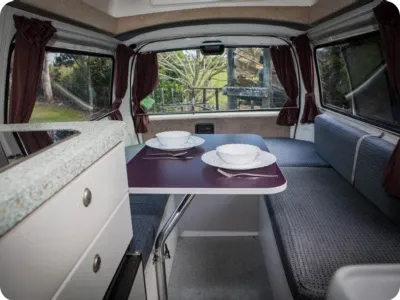
The True Vehicle Category: In New Zealand, a 2-berth motorhome with a built-in shower and toilet offers a completely different level of space compared to a compact campervan, even if commercial photos make them look similar. If you hit a few days of bad weather or plan on doing a lot of free camping, you will feel this difference immediately.
The Fleet Age
The Fleet Age: Some companies offer very recent vehicles, often more expensive, featuring modern layouts and better fuel efficiency. Others rely on older, well-maintained models that are much more budget-friendly. For a pragmatic traveler, an older but well-equipped vehicle can offer excellent value for money.

The Insurance Policy:
The Insurance Policy: A low entry-level price looks attractive until you discover a massive insurance excess (deductible) or a daily excess reduction very expensive. On this point, you need to look at the actual cost required to travel with total peace of mind, not just the initial starting price.
Understanding the Rental Market Categories
Rental companies in New Zealand generally fall into three tiers, each targeting a different type of traveler:
Budget-Focused Brands
These companies are ideal for those who primarily want a functional solution to sleep, cook, and drive without looking for a high-end finish. This is often a great option for long-term road trips where the total cost matters more than luxury.
Premium & Comfort Brands
These providers focus on a premium experience, offering recent vehicles, meticulous interior designs, smoother pick-up processes, and comprehensive roadside assistance. For a first-time campervan trip, this tier provides a lot of reassurance, especially if you aren't yet familiar with New Zealand roads, holiday parks, or wastewater management.
Mid-Range Alternatives
These intermediate brands often provide the best compromise. They might not always be the most visible in standard search results, but they offer an excellent balance of price, equipment, and reliability. This is usually where couples and families find the smartest options to avoid overpaying without settling for a bare-bones setup.

Comparing the Total Trip Cost vs. The Base Price.
A useful comparison must factor in everything you will pay before and during your journey. In New Zealand, unexpected fees can quickly drive up the final invoice:
One-Way Fees: These are common if you pick up your vehicle on the North Island and drop it off on the South Island (or vice versa). Depending on the season and vehicle availability, these fees can be substantial.
Seasonal Demand: Between December and February, prices skyrocket, particularly for family vehicles and 4 to 6-berth motorhomes. Conversely, traveling in spring or autumn often yields much better rates, more choices, and more flexible minimum rental durations.
Included Extras: Always check what is bundled into your quote. An outdoor table, camping chairs, a GPS, snow chains, or unlimited mileage can heavily alter the true value of an offer. A slightly higher base rate might actually save you money if it saves you from a long checklist of paid add-ons.

Comparing the Total Trip Cost vs. The Base Price
A useful comparison must factor in everything you will pay before and during your journey. In New Zealand, unexpected fees can quickly drive up the final invoice:
One-Way Fees: These are common if you pick up your vehicle on the North Island and drop it off on the South Island (or vice versa). Depending on the season and vehicle availability, these fees can be substantial.
Seasonal Demand: Between December and February, prices skyrocket, particularly for family vehicles and 4 to 6-berth motorhomes. Conversely, traveling in spring or autumn often yields much better rates, more choices, and more flexible minimum rental durations.
Included Extras: Always check what is bundled into your quote. An outdoor table, camping chairs, a GPS, snow chains, or unlimited mileage can heavily alter the true value of an offer. A slightly higher base rate might actually save you money if it saves you from a long checklist of paid add-ons.
Common Traps to Avoid in Motorhome Comparisons
Comparing Non-Equivalent Categories
A basic converted van, a certified self-contained Hi-Top campervan, and a large motorhome do not offer the same autonomy, comfort, or camping options. Make sure you are comparing genuinely equivalent setups.
Overlooking Cancellation and Amendment Policies
For an international trip booked months in advance, flexibility has real value. A slightly more expensive option on paper might be the safer choice if it allows for reasonable schedule adjustments.
Underestimating Insurance Costs
Many travelers look solely at the rental price, only to discover the high cost of reducing their insurance excess later on. An independent insurance solution, when available and clearly explained, can often save you a significant amount without sacrificing protection.
Ignoring Customer Support:
In the event of a flight delay, a change of plans, or questions about how to operate the vehicle's systems, having access to a responsive support team makes a world of difference—especially for first-time road trippers.
OUR EXPERIENCE IN VIDEOS

Your journey is unique. Our advice is too.

What budget for a holiday in New Zealand
Lorem ipsum dolor sit amet consectetur
sed do eiusmod tempor incididunt ut labore et dolore magna aliqua. Ut enim ad minim veniam, quis nostrud exercitation
Lorem ipsum dolor sit amet consectetur
sed do eiusmod tempor incididunt ut labore et dolore magna aliqua. Ut enim ad minim veniam, quis nostrud exercitation
Lorem ipsum dolor sit amet consectetur
sed do eiusmod tempor incididunt ut labore et dolore magna aliqua. Ut enim ad minim veniam, quis nostrud exercitation
Should You Choose a Major Brand or a Smaller Local Operator?
Major brands offer reassurance. They feature large fleets, well-established procedures, and multiple depots in major cities. This is a clear advantage during the peak summer season when vehicle availability gets tight.
However, smaller, less commercialized operators should not be overlooked. Many offer highly reliable vehicles, competitive rates, and excellent customer service. If you want to maximize absolute luxury and peace of mind, a premium brand makes sense. If you are hunting for the best equipment-to-price ratio, intermediate local options deserve your full attention.
This is precisely where a local comparison service like DetourNZ comes in—cross-referencing offers, clarifying the fine print, and identifying the vehicle that genuinely fits your specific itinerary, rather than letting you rely purely on advertising or a catchy base rate.
Quick Checklist for a Stress-Free Choice
To narrow down your options without spending weeks researching, start with the core realities of your trip:
How many people are traveling?
How much time will you realistically spend inside the vehicle each day?
Do you absolutely need a built-in shower and toilet?
Do you want to sleep mostly in holiday parks, rely on freedom camping, or do a mix of both?
Once you answer these questions, many options will naturally filter themselves out. From there, compare the vehicle category, the total cost (including insurance and essential options), and the quality of customer support.
Finally, lock in your booking as soon as your travel dates are clear, especially for the southern hemisphere summer. In New Zealand, the best campervans sell out early. Waiting can cost you significantly more or force you to accept a category that doesn't fit your needs. The right campervan isn't the one that looks cheapest on the first click—it's the one that lets you drive confidently, sleep comfortably, and enjoy the country effortlessly.
Hear from Our Happy Travelers
Which Cities Can I Pick Up and Drop Off My Rental Van in Australia?
Rental companies are located in most major Australian cities, including Sydney, Brisbane, Cairns, Hobart, Melbourne,Adelaïde, Alice Spring, Darwin et Perth.
We also have a few partners who offer pick-ups and drop-offs in secondary cities like Broome, Airlie Beach, and the Gold Coast.
Depending on the duration of your stay, we often recommend a one-way trip between two locations (for example, picking up your vehicle in Sydney and dropping it off in Cairns). While there are one-way fees and domestic flights in Australia can be costly, this will save you on fuel and, more importantly, allow you to make the most of your road trip.
When Should I Book My Campervan in Australia?
It's best to book your vehicle as early as possible. Most rental companies offer dynamic pricing that changes over time (the earlier you book, the better the prices) and availability (especially during peak season) becomes very limited very quickly. Therefore, it's important to book as soon as possible to ensure a wider choice at the best prices.
Additionally, most rental companies offer fairly flexible cancellation policies (generally no fees for cancellations more than one month before pick-up). As soon as you've chosen the ideal vehicle and determined your travel dates, you can book your vehicle to start your Australian adventure.
What Equipment is Included in Australian Rental Vans?
Most rental vans in Australia are fully equipped. You'll receive bedding, kitchen utensils, a gas bottle, and more. While the equipment might sometimes be basic, it's comprehensive, so you don't need to bring your own.
Most vehicles offer radios with USB or AUX ports to connect your devices, but camping tables and chairs, solar showers, and GPS are often optional accessories.
Vans and campervans have a second battery, useful for the fridge and interior lights. Campervans also often include a microwave, but you'll need to be connected to electricity (at a campsite) to use it.
Which Cities Can I Pick Up and Drop Off My Rental Van in Australia?
Rental companies are located in most major Australian cities, including Sydney, Brisbane, Cairns, Hobart, Melbourne,Adelaïde, Alice Spring, Darwin et Perth.
We also have a few partners who offer pick-ups and drop-offs in secondary cities like Broome, Airlie Beach, and the Gold Coast.
Depending on the duration of your stay, we often recommend a one-way trip between two locations (for example, picking up your vehicle in Sydney and dropping it off in Cairns). While there are one-way fees and domestic flights in Australia can be costly, this will save you on fuel and, more importantly, allow you to make the most of your road trip.
Experience the Wonders of Australia with Our Expert Guidance
Let Us Craft Your Dream Trip Down Under
Local support
Our team is based locally in Australia and New Zealand, ready to assist you at every step of your journey.
Your personal travel expert
All our agents have extensively traveled the country in campervans, both with and without kids. They love sharing their real-life experience and insider tips.
With you from start to finish
We assist you before you leave (itinerary, activities, campsites) and remain available on-site during your road trip to ensure your peace of mind.

