


-
 4.9/5 sur Google
-
 Personnalised Service
-
 Team Based on site
-
 Experts in motorhomes since 2012
Maori Culture in New Zealand
New Zealand is a country rich in cultural heritage, and Maori Culture is at the very heart of it. Deeply woven into everyday life across the country, it reflects the roughly 15% of New Zealanders who identify as Māori, seen in the countless towns and streets bearing Māori names, as well as the many local stories and legends rooted in Māori history.
Your journey through New Zealand will be all the more rewarding if you take the time to learn a little more about its people and living traditions.
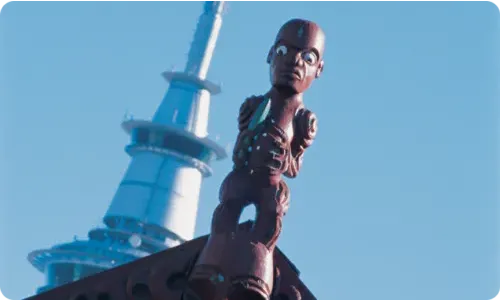
Who are Maori people and where do they come from?
The Maori are a great seafaring people who voyaged vast distances before making New Zealand their final home. Setting out from the Bismarck Archipelago near New Guinea, their ancestors island-hopped across the Pacific before settling in Aotearoa New Zealand in successive waves.
Exact dates remain uncertain, as it is impossible to know for sure who first set foot on New Zealand's shores. According to legend, the great navigator Kupe was the first to arrive, followed several centuries later by organized migrations of Māori tribes (iwi) voyaging toward this "Land of the Long White Cloud" (Aotearoa).
Many of these early settlers favored the country’s western coast, drawn by its milder, more favorable climate. Living closely with the land, early Māori relied heavily on fishing and hunting as essential skills for survival.
Throughout your stay in New Zealand, you will also learn how Europeans arrived and came to coexist with the indigenous population. This relatively recent history is shared widely across the country, as it holds deep symbolic meaning and continues to shape modern Kiwi society. Along the way, you’ll discover just how vibrant and fascinating Māori culture truly is.
A brief history of the Maori people and where to learn more?
While the North Island offers the richest concentration of Māori cultural experiences, the South Island also holds deep cultural significance that shouldn't be overlooked. Highlights include Kaikoura, the legendary vantage point from which the demigod Maui fished up the North Island from the ocean depths; Hokitika, famous for pounamu (sacred New Zealand greenstone/jade); Queenstown, tied to the legend of the giant Matau; Dunedin, an important historic Māori political stronghold; and Nelson and Picton, located at the historic crossroads of trade and conflict between North and South Island tribes (iwi).
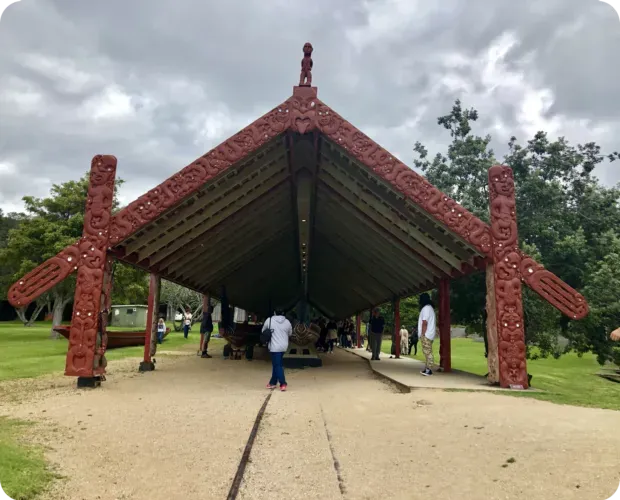
Waitangi
The number-one historic site to visit is the Waitangi Treaty Grounds (and its museum) in Northland's Bay of Islands. This landmark traces the shared history between the Māori people and the arrival of European settlers in Aotearoa.
Beginning in the 17th century, European explorers and settlers began arriving in New Zealand, making figures like Abel Tasman, James Cook and William Hobson central to the country's history. As the islands proved increasingly strategic and attractive to newcomers, many Māori leaders recognized the value of forming an alliance with the British Crown.
It was right here at Waitangi that Māori chiefs and representatives of the British Crown signed the Treaty of Waitangi (Te Tiriti o Waitangi). To this day, the Treaty remains a source of debate and complexity due to critical differences between the English and Māori translations.
February 6, the anniversary of the signing, is Waitangi Day, a national public holiday in New Zealand that is both commemorated and debated, as the English version ultimately favored British governance over Māori sovereignty.
Today, Waitangi stands as the symbolic birthplace of modern New Zealand and the partnership between its two peoples. Inside the site’s museums, including a major newer wing dedicated to telling this sweeping story, you can admire intricate Māori carvings and experience a traditional cultural performance (pōwhiri and kapa haka) depicting how visitors are formally welcomed onto Māori land. After watching this powerful ceremonial challenge (wero), you’ll quickly understand why Abel Tasman turned his ships around immediately, mistaking the fierce welcome for a threat on his life!
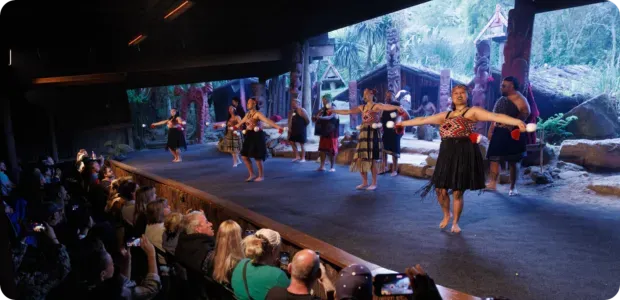
Rotorua
Rotorua is the city where you’ll feel Māori culture most vividly. Māori settled here for generations, quickly recognizing the practical benefits of the area's geothermal waters, providing natural hot water for cooking, bathing, and daily life.
During your stop in Rotorua, you can attend captivating cultural performances showcasing traditional song and dance (kapa haka), and cap off this unforgettable evening with a traditional Māori feast cooked underground: the hāngī.
DetourNZ features this complete evening experience, including the cultural show, song, dance, and hāngī dinner, among its curated activities.
In the rest of the country ...
To deepen your understanding of Māori heritage, Wellington offers the renowned Te Papa museum, featuring dedicated galleries on Māori art, treasures (taonga), and history.
Auckland also welcomes visitors with the Auckland War Memorial Museum, which showcases an impressive collection of intricate Māori carvings and artifacts.
On the South Island, a memorable stop awaits near Nelson on the way toward Tākaka: the Riwaka Resurgence (Te Puna o Riuwaka). Considered a sacred place (tapu) by local Māori, this must-do short walk leads you alongside crystal-clear river waters emerging directly from the base of the towering Tākaka Hill limestone mountain range.
Heading further south toward Christchurch, the cultural experience Ko Tāne (at Willowbank Wildlife Reserve) shares living Māori customs and traditions. Here, you can enjoy an immersive evening featuring traditional song, dance (kapa haka), and a feast, a concentrated dose of history and discovery that invites you to share a truly memorable moment with your hosts.
Maori Culture
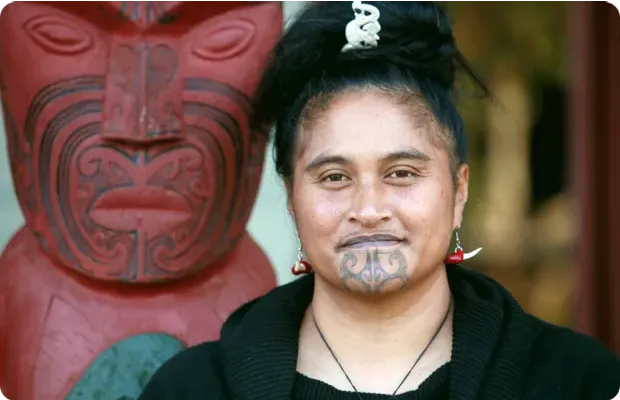
Thriving across every corner of New Zealand, Māori culture holds a central place in the country’s everyday life today, from schools and local communities to major festivals and fine-dining tables. It expresses itself in many vibrant forms, blending culinary arts, traditional wood carving (whakairo), and sacred tattooing (tā moko), alongside the unmistakable power of traditional song and dance (kapa haka).
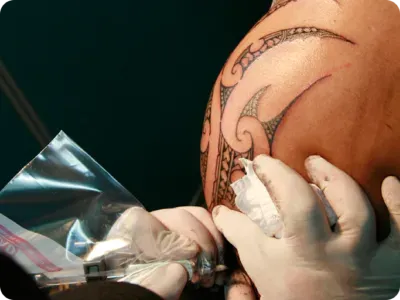
Tattooing: A Living Māori Art Form
If you’re a fan of tattoo art, you’ll quickly notice just how common tattoos are among Kiwis. Traditional Māori designs (tā moko) feature intricate patterns that tell a personal or ancestral story and were historically created through a sacred, and famously painful, chiseled ritual. That said, if you’re thinking of getting a piece done during your trip, modern studios use contemporary tattoo machines (and non-sacred kirituhi designs are typically created for non-Māori visitors).
In Māori culture, tattooing signifies status, heritage, and identity, and the head is considered the most sacred part of the body, which is why you’ll often see Māori people proudly wearing facial tattoos (moko kauae on the chin for women, or mataora across the face for men). If you’re passionate about tattoo culture, don’t miss the NZ Tattoo & Art Festival, held annually in late November in New Plymouth (taking place November 28–29, 2026).
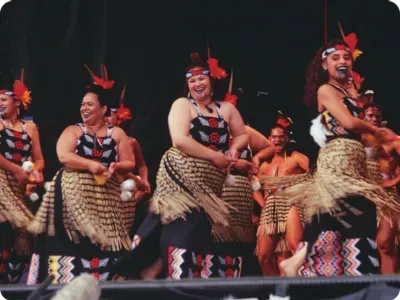
Maori Danse
Dance holds a major place in Maori culture, and visitors are almost always left in awe by the sheer passion behind it. At an All Blacks rugby match, the raw power, intensity, and beauty of the haka performed by the players command the admiration of everyone watching. Historically a traditional war challenge, this posture dance was performed to summon courage and intimidate opponents, every movement, slap, stamp, and chant is deliberate, designed to project fierce strength. The lyrics chanted during a haka carry deep meaning, with the All Blacks most famously performing "Ka Mate".
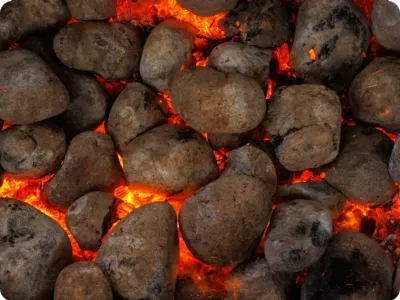
Maori Gastronomy
Māori culinary tradition, known as kai, is rooted in a sacred bond with the land and ocean, championing native and local ingredients such as sweet potato (kūmara), edible fern fronds (pikopiko), freshwater eels (tuna), and seafood (kaimoana).
Its signature cooking method is the hangi, an underground earth oven where wrapped parcels of food are slow-steamed over white-hot volcanic stones, infusing every bite with a distinctive, smoky flavor.
Far more than mere sustenance, Māori gastronomy embodies the core value of "manaakitanga": heartfelt hospitality, care, and generosity toward guests. Today, a new generation of chefs is reimagining this ancestral heritage by pairing native bush herbs, such as peppery horopito and aromatic kawakawa with contemporary fine-dining techniques. Above all, it is a cuisine built around sharing, deeply respectful of the seasons and the natural cycles of the earth.

Lorem ipsum dolor sit amet consectetur
sed do eiusmod tempor incididunt ut labore et dolore magna aliqua. Ut enim ad minim veniam, quis nostrud exercitation
Lorem ipsum dolor sit amet consectetur
sed do eiusmod tempor incididunt ut labore et dolore magna aliqua. Ut enim ad minim veniam, quis nostrud exercitation
Lorem ipsum dolor sit amet consectetur
sed do eiusmod tempor incididunt ut labore et dolore magna aliqua. Ut enim ad minim veniam, quis nostrud exercitation
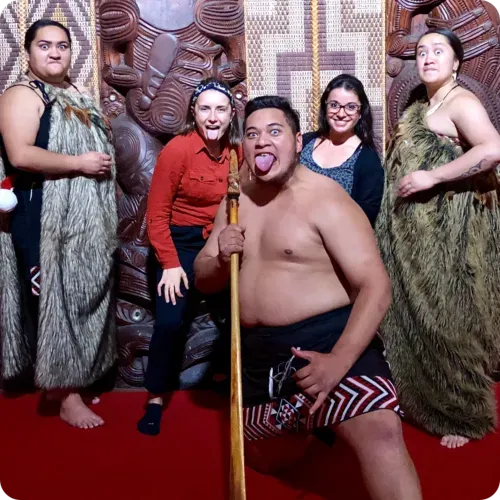
Haka maori
Far more than a war cry made famous around the world by the All Blacks, the haka is first and foremost a powerful form of cultural expression. It is performed to welcome distinguished guests, celebrate major achievements and milestones, or pay deep respect at funerals (tangihanga).
Ka mate Ka mate
I die, I die
Ka ora Ka ora
I am alive, I am alive
Tenei Te Tangata Puhuruhuru
Behold the hairy man
Nana i tiki mai whakawhiti te ra
Who fetched the sun and caused it to shine again
Ah Upane Upane
One step up, another step up!
Upane Kaupane
One step up, right to the top!
Whiti te ra
Let the sun shine!
OUR EXPERIENCE IN VIDEOS

What to do in Auckland?
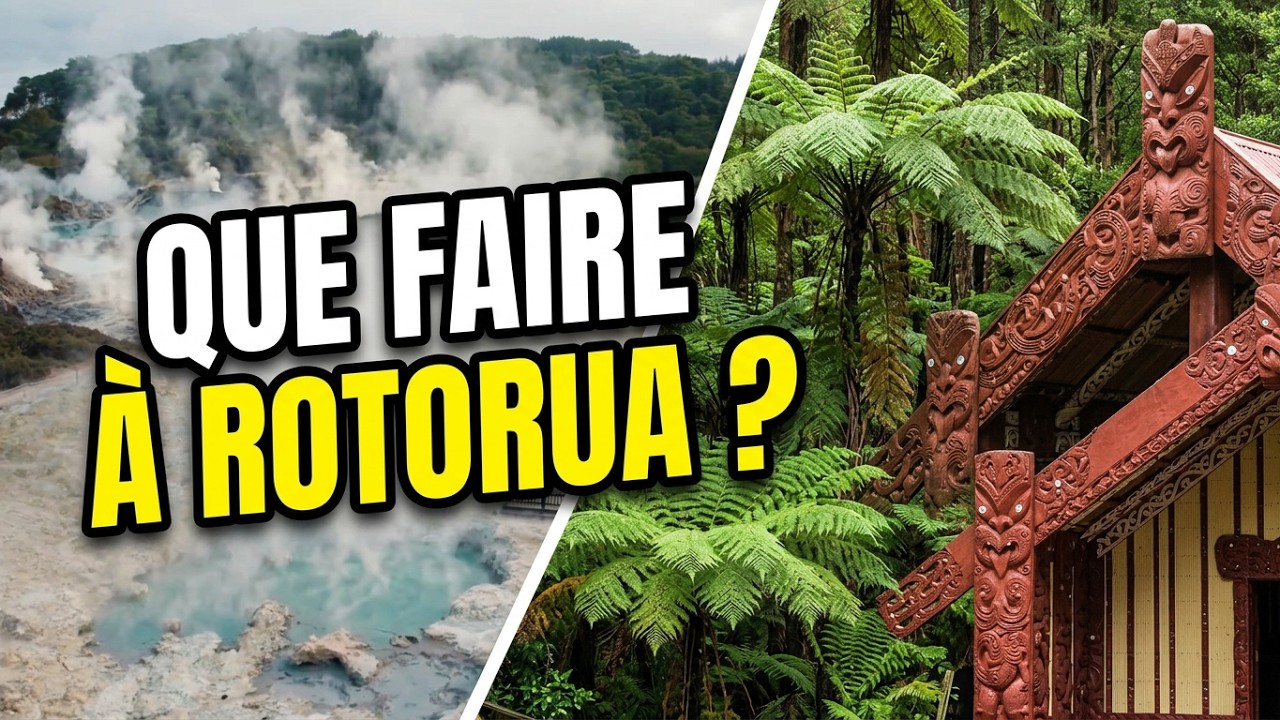
What to do in Rotorua?
Hear from Our Happy Travelers

Wonderful trip and fantastic, personalized French-speaking support when choosing our campervan!
Great experience! The team is efficient and very quick to respond to questions. We requested a ferry booking change, and it was processed the very same day. We recommend them without hesitation!

We had a great experience with this agency; we contacted them before arriving in New Zealand to rent a vehicle. I highly recommend them!

A wonderful trip and excellent personalized support in French for choosing the campervan.
Best Activities, Restaurants, and Experiences to Discover Māori Culture
Discovering Māori culture (Te Ao Māori) in New Zealand means stepping into a living, breathing tradition that weaves together warm hospitality (manaakitanga), ancestral storytelling, nature, and gastronomy. Here is an overview of the best ways to explore this rich heritage—from traditional villages to contemporary dining tables.
Cultural Evenining experience
You’ll find plenty of evening cultural experiences combining song, dance, traditional storytelling, and a feast. Our personal favorite remains Mitai Māori Village in Rotorua: beyond the performances and the hāngī banquet, it includes a guided night walk through the tribe's ancestral forest to spot glowworms. Watching the warriors paddle down the stream in a traditional war canoe (waka) is another unforgettable highlight—and the price offers great value for money.
Culinary Experience - Hangi
A true must-try, this traditional feast—slow-cooked underground over white-hot volcanic stones—lies at the heart of most cultural evening experiences (especially in Rotorua), while also being reimagined in contemporary ways by innovative chefs like Rewi Spraggon. If you’re craving an authentic hāngī in Auckland, head to the Hangi Shop à Otahuhu.
Restaurant Experience
The Māori culinary scene is experiencing a true renaissance, bridging ancestral traditions and contemporary gastronomy, here are a few standout spots to try:
Auckland: Blue Rose Café puts a creative spin on Kiwi classics with its famous hāngī pie, while Morell Bistro celebrates Māori hospitality through bold fusion cuisine.
Wellington: Karaka Café serves waterfront fusion dishes infused with native flavors, such as kawakawa-spiced chicken and classic seafood fritters.
Nelson: KiwiKai showcases local seafood delicacies, including pāua (abalone) and green-lipped mussels, paired with traditional Māori fry bread (parāoa parai).
Artistic Experience
Learning about Māori art in New Zealand goes far beyond visiting museums: numerous workshops led by local artisans and master craftspeople (tohunga) let you get hands-on while gaining insight into the symbolism and cultural protocols (tikanga) behind each discipline. Here are several traditional workshops worth trying during your trip:
Flax weaving (raranga): Craft traditional baskets or flowers using native New Zealand flax (harakeke).
Wood carving (whakairo): Discover the storytelling behind intricate ancestral patterns.
Greenstone or bone carving (mahi pounamu / bone carving): Carve your own meaningful pendant (taonga) to take home.
Song, dance, and poi (kapa haka): Learn traditional posture dances, chants, and poi spinning techniques.
Traditional painting and scroll patterns (kōwhaiwhai): Explore the bold red, black, and white motifs traditionally painted on meeting-house rafters.
Te Puia in Rotorua, home to the New Zealand Māori Arts and Crafts Institute is an outstanding introduction to all of these living art forms.
Where Can I Meet Māori People in New Zealand?
Across New Zealand (Aotearoa), meeting Māori people and experiencing their living culture is possible everywhere you go whether through hosted cultural experiences, Māori-led nature tours, or everyday encounters.
Rotorua is one of the country’s most iconic centers of Māori culture, home to renowned cultural experiences such as Te Puia, Mitai Māori Village, Te Pā Tū (formerly Tamaki Māori Village), and the living geothermal village of Whakarewarewa. Here, you can experience traditional song and dance (kapa haka), wood carving (whakairo), flax weaving (raranga), ceremonial welcomes (pōwhiri), and share a traditional earth-cooked feast (hāngī).
Further north, the Waitangi Treaty Grounds located in the Bay of Islands, right next to Paihia offer deeper insight into New Zealand’s founding history, the signing of the Treaty of Waitangi (Te Tiriti o Waitangi), and the relationship between Māori and Europeans, brought to life through guided tours and live cultural performances.
Major museums like Te Papa Tongarewa in Wellington and the Auckland War Memorial Museum also feature extraordinary collections and guided tours that help you grasp key historical and symbolic milestones before connecting directly with local communities.
Finally, simply by traveling around New Zealand, you’ll naturally meet Māori in everyday life in local shops, holiday parks, natural landmarks, on sports fields, and at community events. A warm smile, a friendly "Kia ora" (hello / thank you / wishing you well), and an open attitude are often all it takes to spark a genuine connection.
What is a marae?
A marae (pronounced "mah-rye" or "mah-rah-eh") is the beating heart of community, cultural, and spiritual life for a Māori tribe or sub-tribe (iwi or hapū). Far more than a single building, it is a sacred complex where the community gathers for life’s defining moments from formal welcomes and celebrations to important decision-making meetings, weddings, and funerals (tangihanga).
It serves simultaneously as a spiritual sanctuary, a community hall, and a central gathering place.
Unlike a museum, a marae is not open freely to the general public. Visitors enter only by invitation or as part of a hosted cultural experience such as in Rotorua, at Waitangi, or on a guided tour with a Māori host. The welcome is deeply warm and accommodating, with hosts guiding guests step by step through the protocol: simply remember to remove your shoes before stepping inside the ancestral meeting house (wharenui) and always ask permission before taking photos.
Here are a few commun words
Greetings & Everyday Values
Kia ora (kee-ah oh-rah): Hello, thank you, or "be well." It is the most common Māori greeting in New Zealand, heard at any time of day.
Haere mai (high-reh my): Welcome. You’ll often see it displayed at the entrance to public buildings and, of course, as you arrive at the airport.
Tēnā koe (teh-nah kweh): Hello or thank you addressed to one person (slightly more formal).
Ka kite anō (kah kee-teh ah-naw): Goodbye, see you again soon.
Aroha (ah-raw-hah): Love, kindness, compassion, and empathy.
Land, Nature & Place Names
Aotearoa (ah-oh-teh-ah-raw-ah): The Māori name for New Zealand, commonly translated as "Land of the Long White Cloud."
Whenua (feh-noo-ah): Land, country, or territory. This word symbolizes the deep, nurturing bond between Māori people and the earth (and also means "placenta").
Wai (why): Water. You’ll spot it at the start of countless New Zealand place names, such as Waitangi, Waikato, and Waiheke.
Moana (maw-ah-nah): Ocean, sea, or a large lake.
Maunga (mah-oong-ah): Mountain.
Family, Food & Hospitality
Whānau (fah-now): Extended family, loved ones, and close community.
Kai (kye): Food, a meal.
Hāngī (hahng-ee): The traditional feast slow-cooked underground in an earth oven.
Manaakitanga (mah-nah-ah-kee-tahng-ah): Hospitality, a warm welcome, and caring generously for visitors.

