


-
 4.9/5 sur Google
 -
 Personnalised Service
 -
 Team Based on site
 -
 Experts in motorhomes since 2012
Motorhome Hire in Australia: Your Ultimate Road Trip Guide
Australia is THE ultimate destination for an unforgettable road trip. This vast country offers a wealth of incredible sights, quality and affordable infrastructure, and most importantly, the road itself is part of the adventure.
Hiring a campervan in Australia is an ideal way to explore the country.
This type of holiday is incredibly popular because it offers unparalleled flexibility and freedom – you can discover each region at your own pace and truly immerse yourself in an authentic experience.
If you're interested in an Australian road trip, here are the answers to all your questions to help you plan your perfect van life in Australia.
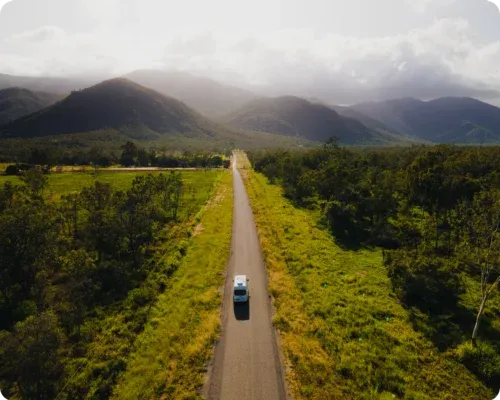
What Are the Different Vehicle Models Available for Hire in Australia?
You'll find various types of vehicles perfect for exploring Australia:
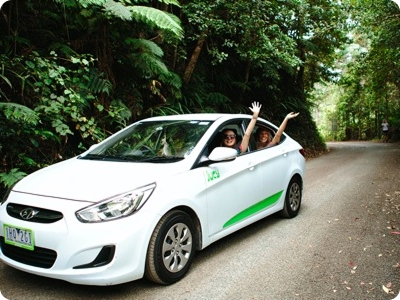
RENTAL CAR
Ideal for comfortable travel from one destination to another.
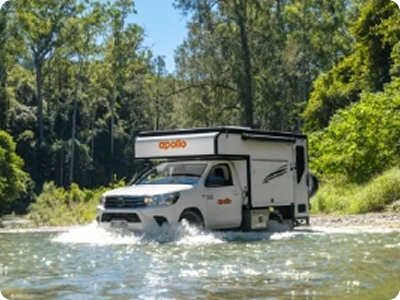
4WD VEHICLE
This vehicle allows you to go off the beaten path and delve deep into the Australian bush. Be aware that while these vehicles offer greater autonomy, most 4x4 rental companies still have certain restricted roads.
Check out all: our 4WD vehicle in Australia
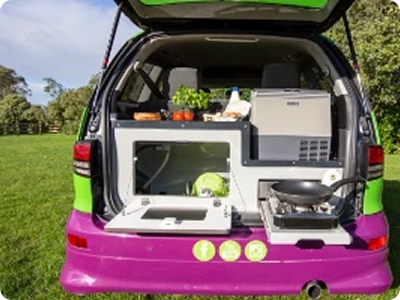
BACKPACKER VAN
A budget-friendly option that gives you all the benefits of a standard car—easy to drive and park anywhere—while doubling as your sleeping space. While these compact cars can seat up to 4 passengers, they generally only sleep up to 2 people. Keep in mind that space inside is cozy and compact, though they come fully outfitted with all the essentials for your trip.
Find here: all our campers / backpackers van
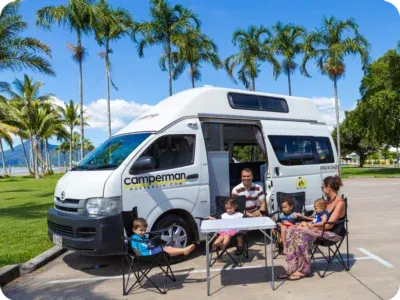
CAMPERVAN
Compact and easy to drive, these vehicles offer great self-sufficiency, typically featuring a small kitchenette and a spacious bed for maximum comfort. They are the ideal choice for your first vanlife experience!
Bigger than standard minivans, they provide generous sleeping space, with standing room available in select high-top models. Each comes fully equipped with a practical kitchenette, usually including a fridge and a gas cooker.
Note: 4WD vehicles are only available in specific regions suited for off-road travel.
Explore our full range on our campervan search tool
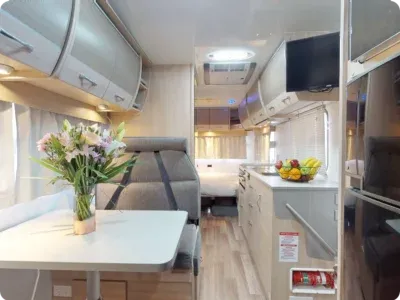
MOTORHOME or VR
Spacious and comfortable, a motorhome gives you complete self-sufficiency and generous living space for your Australian holiday. These vehicles are true homes on wheels, fully equipped with a dining lounge, onboard shower and toilet, a full kitchenette, and large beds.
They are an extremely popular choice for long-distance Australian road trips, offering extended freedom and access to a wide network of designated campgrounds and holiday parks across the country.
Check out all: our motorhome in Australia
How to Choose the Right Rental Vehicle?
Choosing the perfect vehicle for your trip isn't always easy. "What’s the best motorhome to rent in Australia?" "Should I go for a budget campervan?" "Will a cheaper van break down on me?" Asking yourself these questions is an essential part of finding the right ride. (Check out our full FAQ here).
To make things simple, try our campervan comparison tool. Just enter your pickup city, drop-off location, and travel dates. Based on your age group and passenger count, our tool automatically curates a top selection—highlighting the Best Value, Most Popular, and Team Favorite options.
You'll also see all other available vehicles for your dates listed below.
Now, it’s time to narrow it down based on your personal needs:
Number of Travelers
The right vehicle depends heavily on who’s traveling with you. The required number of seatbelts and sleeping spaces is your first decision point. Keep in mind that berth count doesn't always reflect overall vehicle size—4-berth and 6-berth motorhomes are often built on the same chassis. However, couples or friends traveling in pairs frequently choose a 4- or 6-berth motorhome. This gives you extra living space and eliminates the need to pack away your bed every morning if it's located in the main lounge area.
Preferred Vehicle Type
Do you prefer a nimble, compact campervan or a spacious motorhome with home comforts? Looking to step off the beaten track and explore the Outback? A 4WD is the way to go.
4WDs: Built for unpaved tracks and rugged dirt roads, 4WD rentals are compact yet robust, featuring specialized safety gear not found in standard vans or motorhomes. They are generally pricier and often come with daily kilometer limits. We recommend them if off-road tracks make up a significant part of your itinerary. Configurations vary: some feature roof-top or ground tents, while others offer interior sleeping setups. Unsure which setup suits your route? Request a free quote, and our team will get back to you within 48 hours.
Campervans: Highly versatile and perfectly suited for Australian road trips, campervans fit a wide range of budgets. Quality varies by provider: premium suppliers offer late-model, fully fitted vans, while budget suppliers offer simpler, rustique models at lower rates. Note that campervans max out at 4-berth capacity—there are no 6-berth campervans.
Motorhomes: Spacious, self-contained, and fully equipped with onboard showers, toilets, full kitchens, and dining lounges. Seating up to 6 passengers, motorhomes deliver maximum comfort and independence with large water tanks, refrigeration, and plush beds. They are ideal for remote stretches where towns and amenities are spaced far apart.
Customer and Team Reviews
Every vehicle in our fleet is rated by both past travelers and our local staff. Our star-rating system gives you an honest, transparent benchmark for vehicle quality before you book.
Features and Amenities
Do you need air conditioning while parked? A king-sized bed? An onboard hot shower and toilet? Consider these non-negotiables beforehand. While optional extras like camping chairs, tables, extra gas bottles, or satellite phones can easily be added later, built-in features like bed dimensions and cab/living AC cannot be changed once booked
Budget
Ultimately, your choice will align with your travel budget. Budget sleepervans and converted station wagons let you explore Australia economically. Premium motorhomes and 4WD campers offer elevated comfort and off-grid capability at a higher price point. Balance your preferred comfort level against your overall rental budget to find your ideal match.

How to Save Money on Your Campervan or Motorhome Rental?
Looking to stretch your travel budget further? Here are our top tips for getting the best deal on your Australian road trip:
Book as early as possible: Take advantage of early-bird discounts—usually around 5% to 8% off, depending on the supplier. Rates also operate on flexible pricing, meaning the earlier you book, the lower the base rate will be.
Stay flexible with your route: Rental rates often vary depending on the direction you travel. For example, driving from Cairns to Sydney can sometimes be significantly cheaper than driving from Sydney to Cairns due to vehicle relocations.
Avoid peak holiday periods: Prices spike dramatically during school holidays and the Christmas/New Year period (roughly mid-December to mid-January).
Extend your trip to 21+ days: Most suppliers offer generous long-term rental discounts for bookings of 21 days or more.
Say hello and ask nicely: If we can apply a extra discount or special deal to your quote, we definitely will! :) — Request a free quote today
Lorem ipsum dolor sit amet consectetur
sed do eiusmod tempor incididunt ut labore et dolore magna aliqua. Ut enim ad minim veniam, quis nostrud exercitation
Lorem ipsum dolor sit amet consectetur
sed do eiusmod tempor incididunt ut labore et dolore magna aliqua. Ut enim ad minim veniam, quis nostrud exercitation
Lorem ipsum dolor sit amet consectetur
sed do eiusmod tempor incididunt ut labore et dolore magna aliqua. Ut enim ad minim veniam, quis nostrud exercitation
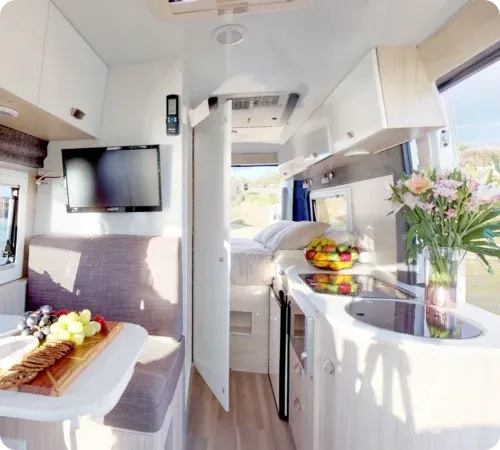
What gear and equipment are included in Campervans or motorhomes?
Most rental campervans in Australia come fully equipped with all the essentials—including bedding, cooking utensils, and a gas bottle. While the included gear can sometimes be standard, it is completely functional and comprehensive, so there's no need to pack your own household gear from home. Most rental companies also provide a bath towel per passenger.
Vehicles typically feature built-in sound systems with Bluetooth, USB, or AUX connections for your personal devices. However, items like outdoor camping tables and chairs, solar showers, or portable GPS units are usually offered as optional add-ons during checkout.
Campervans and motorhomes feature a dual-battery system to power the onboard fridge and interior lighting when parked. Motorhomes often include a microwave as well, though keep in mind this requires a powered campsite connection (240v) to operate.
If you find you're missing anything once you pick up your vehicle, ask your rental provider first. Otherwise, you can easily grab extra supplies at Bunnings or Mitre 10 / Home Hardware stores, which are located in almost every major town across Australia.
OUR EXPERIENCE IN VIDEOS
Your journey is unique. Our advice is too.
What equipment in a motorhome?
Understanding Campervan and Motorhome Insurance in Australia
When picking up your rental vehicle, the supplier will require a security bond (also known as a liability excess), which typically ranges from $3,500 for campervans up to $7,500 for larger motorhomes.
Suppliers generally offer three main levels of insurance cover:
Standard Cover (Included): This basic cover comes included in your base rental rate and fulfills the mandatory insurance requirements for vehicles on Australian roads. However, it carries the maximum financial exposure. You will need to leave a full security bond at pickup, and in the event of damage or an accident, the rental company can charge up to the maximum liability excess amount.
Mid-Tier Cover (Reduced Excess): This option provides partial protection by reducing your overall liability excess (usually by around half) in exchange for a small daily fee paid directly to the supplier.
Full Cover / Value Pack (Zero Excess): This is the most popular choice for international travelers. Full cover eliminates your liability excess completely ($ excess), meaning you don't need to leave a large security bond at pickup. It also frequently includes popular optional extras, like camping tables and chairs, at no additional cost.
| Rental company | Vehicle | Excess amount | Full insurance price | Intermediate insurance price | Standard insurance price |
|---|---|---|---|---|---|
| MAUI | Motorhome | $7,500 | $75 | $55 | $0 |
| BRITZ | 4x4 | 8.000$ | 80$ | 60$ | 0$ |
| BRITZ | Camping-car | 7.500$ | 70$ | 55$ | 0$ |
| BRITZ | Van | 5.000$ | 60$ | 50$ | 0$ |
| APOLLO | Camping-car | 7.500$ | 70$ | 55$ | 0$ |
| APOLLO | Van | 5.000$ | 60$ | 50$ | 0$ |
| MIGHTY | Camping-car | 7.500$ | 65$ | 50$ | 0$ |
| MIGHTY | Van | 5.000$ | 50$ | 40$ | 0$ |
| CHEAPA | Camping-car | 7.500$ | 65$ | 50$ | 0$ |
| CHEAPA | Van | 5.000$,50$" | 40$ | 0$ | |
| HIPPIE | Van | 3.000$ | 40$ | 30$ | 0$ |
| CRUISIN | Camping-car | 7.500$" | 55$ | 45$ | 0$ |
| GO CHEAP | Camping-car | 7.500$ | 55$ | 45$ | 0$ |
| GO CHEAP | Van | ,5.000$" | 39$ | 29$ | 0$ |
| JUCY | Camping-car | 7.500$" | 65$ | 49$ | 0$ |
| JUCY | Van | 5.000$ | 55$ | 40$ | 0$ |
| TRAVELLERS AUTOBARN | Van | 3.000$ | 45$ | 35$ | 0$ |
| SPACESHIPS | Van" | 3.000$ | 30$ | 20$ | 0$ |
| CAMPERMAN** | Van | $500 | Inclus | / | / |
*Prices are in Australian Dollars (AUD) and are for individuals aged 21 and over.
**Camperman already includes full insurance in the rental price but requires a $500 AUD excess.What Budget Should You Plan for an Australian Road Trip?
Traveling around Australia in a campervan or motorhome is accessible to almost any traveler, but it does come with specific upfront and daily expenses.
When building your road trip budget, you'll need to factor in the following key costs:
Vehicle Rental Cost
There are options available for every budget, though prices fluctuate significantly depending on the season. Keep in mind that rates increase as your travel dates get closer, making early booking essential. Additionally, most rental companies offer long-term discounts for bookings of 21 days or longer. Use our online search engine to check real-time vehicle pricing for your dates
Campsites and Accomodation
There are several options for where to sleep during an Australian road trip, and nightly costs vary depending on the style of campsite you choose. The most budget-friendly options are public rest areas—these are free to use but offer only basic facilities. At the higher end, fully equipped holiday parks (such as the BIG4 Holiday Parks chain) can cost up to $60 per night (check out our complete Australian Campsite Guide for more details)
Fuel
Australia is a vast country, and you'll cover considerable distances during your journey. While fuel is relatively affordable in Australia, prices vary significantly by region and remoteness. To monitor live fuel prices across your route, download the Petrol Spy app. As a general rule of thumb, budget around $200 for every 1,000 km driven
Insurance and Cover
Protecting yourself and your rental vehicle is a critical part of planning your trip. Daily rates for excess liability reduction vary by supplier (typically ranging between $30 and $80 per day). Be sure to read our detailed insurance guide for a full breakdown.
Food and Groceries
Most campervans come equipped with an internal kitchen, allowing you to prepare your own meals. Cooking for yourself saves a significant amount compared to dining out, but you should still factor groceries into your total trip budget. As a baseline, supermarket prices in Australia are fairly comparable to those in Western Europe. For two adults eating breakfast, lunch (sandwiches), and dinner at the campervan, budget around $220 per week.
Activities and Excursions
Australia is a vast playground for travelers of all ages. While there are countless incredible tours and experiences available, activity fees can add up quickly. Explore our Activities & Tours page to discover the top recommended experiences across the country and check pricing.
Additional Expenses
Beyond major travel costs, smaller incidental expenses will inevitably pop up during your trip. While modest on a day-to-day basis, they add up over time. We recommend setting aside a dedicated buffer budget for these incidentals so you can enjoy your journey without financial stress.
Examples of incidental costs:
Toll roads
Parking fees
Personal spending (drinks, dining out, souvenirs)
Tourist visas (ETA/eVisitor)
Airport transfers (taxis, rideshares, or shuttles)
Travel & medical insurance
Where to Camp in Australia?
Traveling around Australia in a campervan comes with a unique set of nomadic living principles.
Freedom camping (or wild camping) is not legal everywhere in Australia. While there are thousands of designated camping sites across the country—both free and paid—you must always park at an authorized location when spending the night in your vehicle.
Camping regulations vary from state to state, so it is essential to follow local laws as well as campervan etiquette: leave no trace, show respect for local communities, and protect the surrounding environment and native wildlife.
Here are the primary overnight accommodation options for your Australian road trip:
| Campsite Type | Price | Commodities |
|---|---|---|
| Aire de repos | Généralement gratuits | Très peu de commodités |
| Camping d'état | $20 à $50 / nuit | Très bon confort avec toutes les commodités |
| Camping privé | $15 à $40 / nuit | Bon confort avec tout le nécessaire |
| Camping parc National | $10 à $30 / nuit | Confort parfois rudimentaire, mais dans des endroits magnifiques |
| Camping dans des chaines | $20 à $60 / nuit | Très bon confort avec souvent des piscines ou aires de jeux |
What is the Best Itinerary for a Trip to Australia?
Australia is a vast continent—roughly 14 times the size of France—so most travelers focus on specific regions rather than trying to cover the entire country in a single journey.
The country is made up of six distinct states (plus internal territories), each offering its own unique landscapes and iconic attractions. The ideal itinerary depends on the regions you want to explore and the sights on your bucket list.
Explore all of our custom road trip routes on the Itineraries page of our website.
New South Wales
New South Wales, with Sydney as its main city, is often the arrival and departure point for travelers. This state, twice the size of France, boasts a superb coast, rainforests, and numerous bays. Inland from Sydney, the Hunter Valley vineyards are a favorite among wine lovers. Similarly, the "Blue Mountains" are a magnificent tourist site not to be missed.
The best time to visit New South Wales is summer, between December and March. If you go outside this period, don't worry; the sun shines almost all year round.
Queensland
Queensland is a very popular region for travelers, as it's never cold there, and there's an enormous amount to see and do. As with most states, activity is concentrated on the coast. You won't miss Surfers Paradise, Brisbane, Cairns, and the many small coastal towns. You'll find activities focused on the sea, water sports, and aquatic activities. The Great Barrier Reef is the prime example. Another major site is Daintree National Park, a lush rainforest that will undoubtedly dazzle you. For families, also plan a day or two to visit the theme parks of SeaWorld, MovieWorld, and DreamWorld.
Northern Territory
The Northern Territory is Australia's most arid and wild state. It's also the least populated, with 200,000 inhabitants spread over an area three times the size of France. It could have been named the "Red State" due to the predominant color of the region and its very hot temperatures. The desert occupies a significant part of the state and is home to the famous Uluru (Ayers Rock). This state contrasts between the desert in the south and the oases in the northern part, such as Kakadu National Park, making this part of Australia a popular stop for visitors wishing to experience the true Australian Outback. This state also has the unique feature of being home to saltwater and freshwater crocodiles. You can take superb boat trips to encounter crocodiles in Kakadu.
Western Australia
Western Australia is the largest state in Australia, representing one-third of the continent. This part of Australia is currently experiencing rapid economic growth due to its tourism, but mainly thanks to its mining activity. It is indeed one of the most active regions in the world for minerals. Western Australia is responsible for 15% to 20% of the world's production of aluminum, industrial diamonds, iron, and nickel.
The main city of this state is Perth, known as the "City of Light." Western Australia can be divided into two parts. The southern part is mainly known for its wines, but also for its surf beaches. The northern part, covering 400,000 sq km, is unique due to its many wild animals, such as kangaroos and dolphins, and its peculiar landscapes formed by caves, gorges, and canyons millions of years old. A stay in Western Australia will allow you to discover the real Australia and its Outback.
South Australia
South Australia is the driest state in Australia; it rarely rains there. The climate is Mediterranean. Ideal for wine lovers, you'll find the best vintages in Australia here. Adelaide is the capital of this state. Also called the "City of Churches," Adelaide is known for its gastronomy and parks. You cannot go to South Australia without visiting Kangaroo Island (30% of the island is protected), where you can admire birds and other animals in the wild.
Victoria
Victoria is the smallest state in Australia, but it encompasses some of the most beautiful national parks in the country. The Great Ocean Road, along the coast, has been voted one of the most beautiful roads in the world. This route is ideal for traveling with your campervan. The main city in Victoria is Melbourne. Considered the fashion and cultural capital of Australia, Melbourne is the second largest city in the country after Sydney.
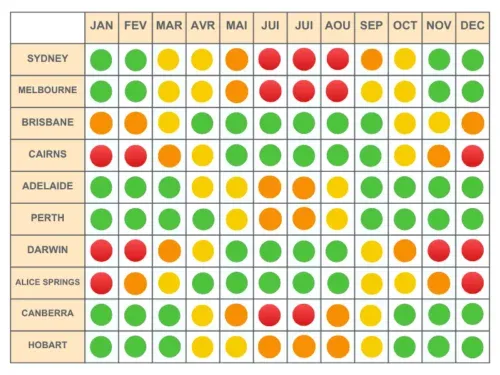
What is the weather in Australia?
Australia’s seasons are opposite to those in the Northern Hemisphere, with three distinct climate zones across the country:
The Tropical North (Darwin, Cairns, Broome): Warm to hot year-round. The dry season (May to October) brings clear skies and optimal travel conditions, while the wet season (November to April) brings high humidity, heavy rainfall, and potential road closures on unpaved tracks.
The Temperate South (Sydney, Melbourne, Perth, Tasmania): Features four distinct seasons. Southern summer (December to February) is warm and sunny, whereas winter (June to August) is cool and occasionally rainy.
The Arid Centre / Outback (Uluru, Alice Springs): A desert climate defined by extreme temperature shifts: scorching summers (frequently exceeding 40°C) and mild winter days followed by freezing nights.
Golden Rule for Your Campervan Trip:
Head north and into the Outback during the southern winter (May to September), and save the southern coast and Tasmania for the southern summer (November to March).
Which Cities Can I Pick Up and Drop Off My Rental Van in Australia?
Rental companies are located in most major Australian cities, including Sydney, Brisbane, Cairns, Hobart, Melbourne,Adelaïde, Alice Spring, Darwin et Perth.
We also have a few partners who offer pick-ups and drop-offs in secondary cities like Broome, Airlie Beach, and the Gold Coast.
Depending on the duration of your stay, we often recommend a one-way trip between two locations (for example, picking up your vehicle in Sydney and dropping it off in Cairns). While there are one-way fees and domestic flights in Australia can be costly, this will save you on fuel and, more importantly, allow you to make the most of your road trip.
When Should I Book My Campervan in Australia?
It's best to book your vehicle as early as possible. Most rental companies offer dynamic pricing that changes over time (the earlier you book, the better the prices) and availability (especially during peak season) becomes very limited very quickly. Therefore, it's important to book as soon as possible to ensure a wider choice at the best prices.
Additionally, most rental companies offer fairly flexible cancellation policies (generally no fees for cancellations more than one month before pick-up). As soon as you've chosen the ideal vehicle and determined your travel dates, you can book your vehicle to start your Australian adventure.
What Driver's Licence Do I Need?
To go on a road trip in Australia—whether in a motorhome, campervan, or car—you must carry both your national driver's licence AND an International Driving Permit (IDP). You need both documents with you at all times when driving if your driving licence is not in English.
If you are unable to obtain an International Driving Permit in time, you can get an official certified translation of your national driver's licence instead. The translation must be completed by a translator or organization accredited by NAATI (National Accreditation Authority for Translators and Interpreters), which is the official Australian standard.
Good to know: To drive a campervan or motorhome in Australia—even large models seating up to 6 people—you do not need a special heavy vehicle driver's licence. A standard passenger car licence is completely sufficient.
Do I Need a Visa ro Visit Australia?
Yes, you must hold a valid visa to enter Australia. The type of visa you require depends on your nationality, the duration of your stay, and the purpose of your trip (such as tourism, business, studying, or working).
For full details and step-by-step application instructions, check out our complete Australian Entry Requirements Guide.
How Far Should You Drive Each Day?
Australia is a vast continent with long distances between stops. To get a clear idea of driving times between destinations, Google Maps is a great tool for planning your route. However, building rest stops into your daily itinerary is crucial.
As a general rule, we recommend driving a maximum of 3 to 4 hours per day. This is essential for safety, but more importantly, it allows you to relax and make the absolute most of your holiday.
Important Safety Tip: Avoid driving at dusk, dawn, or after dark outside major towns. Native wildlife becomes active during these hours and is frequently drawn toward headlights, significantly increasing the risk of collisions.
Is It Safe to Do a Road Trip in Australia?
Yes, Australia is a very safe and well-organized country. The crime rate is quite low, making it generally a very safe destination for road trips.
That said, as with anywhere in the world, you can always happen to be in the wrong place at the wrong time. It’s always smart to exercise common sense and stay aware of your surroundings, but there is no need to be overly anxious or paranoid during your travels.
Hear from Our Happy Travelers
Experience the Wonders of Australia with Our Expert Guidance
Let Us Craft Your Dream Trip Down Under
Local support
Our team is based locally in Australia and New Zealand, ready to assist you at every step of your journey.
Your personal travel expert
All our agents have extensively traveled the country in campervans, both with and without kids. They love sharing their real-life experience and insider tips.
With you from start to finish
We assist you before you leave (itinerary, activities, campsites) and remain available on-site during your road trip to ensure your peace of mind.

